The real fear was never the technology (AI)
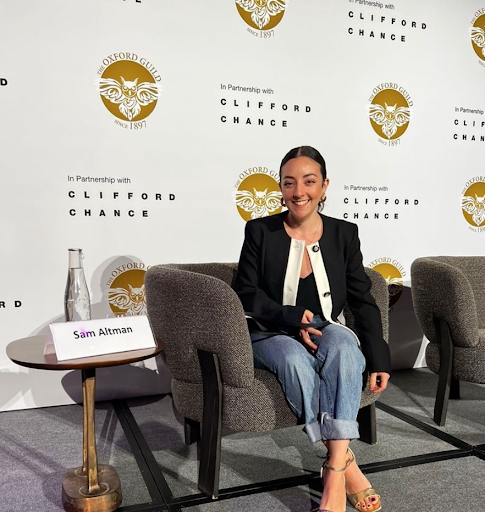
Three years ago, I was in a small room in London with Sam Altman, just months after ChatGPT launched. How I ended up there is a story for another day. What I still have are my notes from that afternoon, typos and all, which I never bothered to fix.
I walked in expecting the usual tech-bro energy: ego, speed, "move fast, break things." Instead, I got someone talking seriously about regulation, education and social mobility. I remember thinking, "Okay, this one's different."
Almost three years later, we're having the exact same conversation. Fear. Existential risk. "We need to regulate this now." And nobody asks the obvious question: afraid of whom, exactly? Technology doesn't decide anything. We do. If anything here is dangerous, it's not the model — it's whoever's holding it.
And when it ends up in the right hands, it doesn't break anything. It does things no panel of "AI experts" ever saw coming.
Tariku, Ethiopia, and 500 paper records
I volunteered in Ethiopia for the second time, and if I learned one thing the first time around, it's that you almost never end up doing what you planned. You show up with an idea of how you're going to help, and reality hands you something else, usually less glamorous but way more necessary.
This time, it was this: Since 2016, the organization had not managed to digitize the medical records of the kids it serves. Almost a decade's worth of check-ups and clinical histories sat in paper folders because nobody had the time or the staff to process them. Not laziness — just too much work for too few hands.
I sat down with more than 500 handwritten records in Amharic, dated according to the Ethiopian calendar (which isn't the Gregorian calendar, in case you wanted a bonus puzzle). I started using AI to decode them one by one. It worked.
The problem: I had to go back to Mexico, and there was still a mountain of work left. If I wanted the project to survive without me, I needed someone there to keep it going.
That's where Tariku came in, a 14-year-old I'd met at the organization. He's the kind of kid who learns English from movies because nobody ever told him that's not how it works. He'd never touched an AI tool before, so I showed him the basics so he could help with the records.
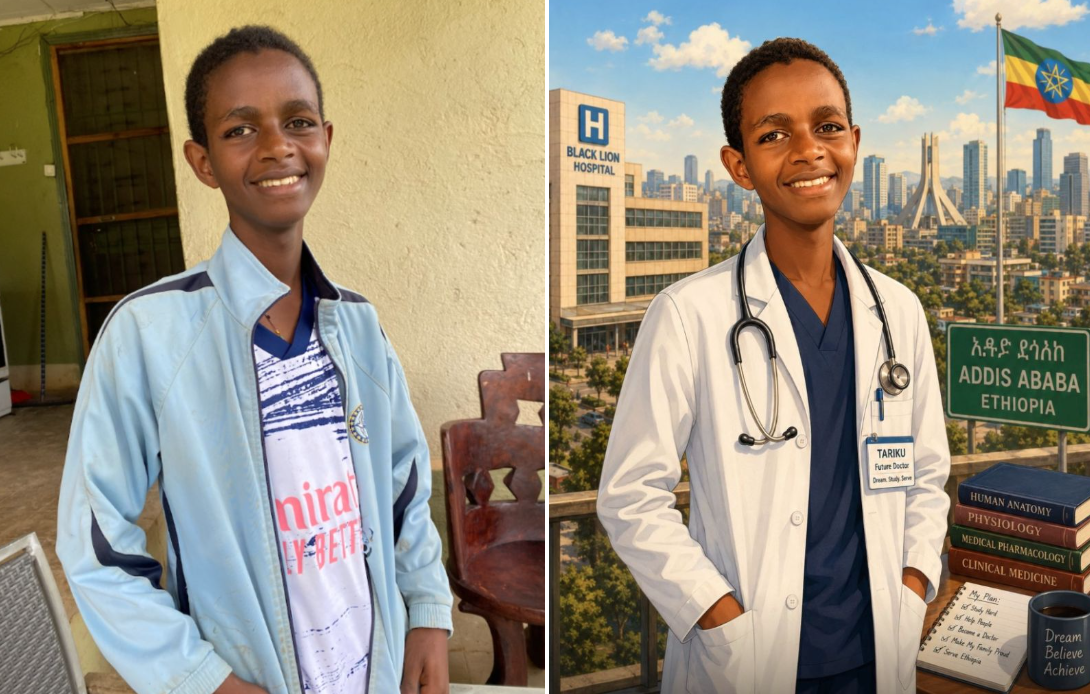
The second he realized he could ask an AI for literally anything, he didn't use it for the project. He used it to ask ChatGPT to draw him as the neurosurgeon he dreams of becoming one day. What came back was him in a white coat, stethoscope on, standing in front of Black Lion Hospital in Addis Ababa. He printed it out. It's still hanging in his house.
We're still working together: me in Mexico, him in Ethiopia. And between us sits a gap that, in any other context, would decide who gets access to this kind of technology and who doesn't. I'm 33 with two degrees. Tariku is 14, growing up in a village dealing with food insecurity and going to a public school, with whatever that comes with.
In almost any other tech, that gap would've been the whole story: game over before it started. With AI, it just wasn't a factor. Nobody asked Tariku for a diploma, fluent English or a decent laptop. All he needed was curiosity and a phone.
That's the part I find genuinely remarkable: this technology doesn't check your income or your education before letting you in. It puts talent in the same room, even when geography says it shouldn't be possible.
Lucero, and laughing at the same memes
The second story is about Lucero, my friend, who's visually impaired. For years, that meant that something as simple as knowing who's in a photo or understanding why everyone in the group chat is laughing at a meme just didn't reach her. Not for lack of curiosity. There was simply nothing that could translate the visual world into something she could process.
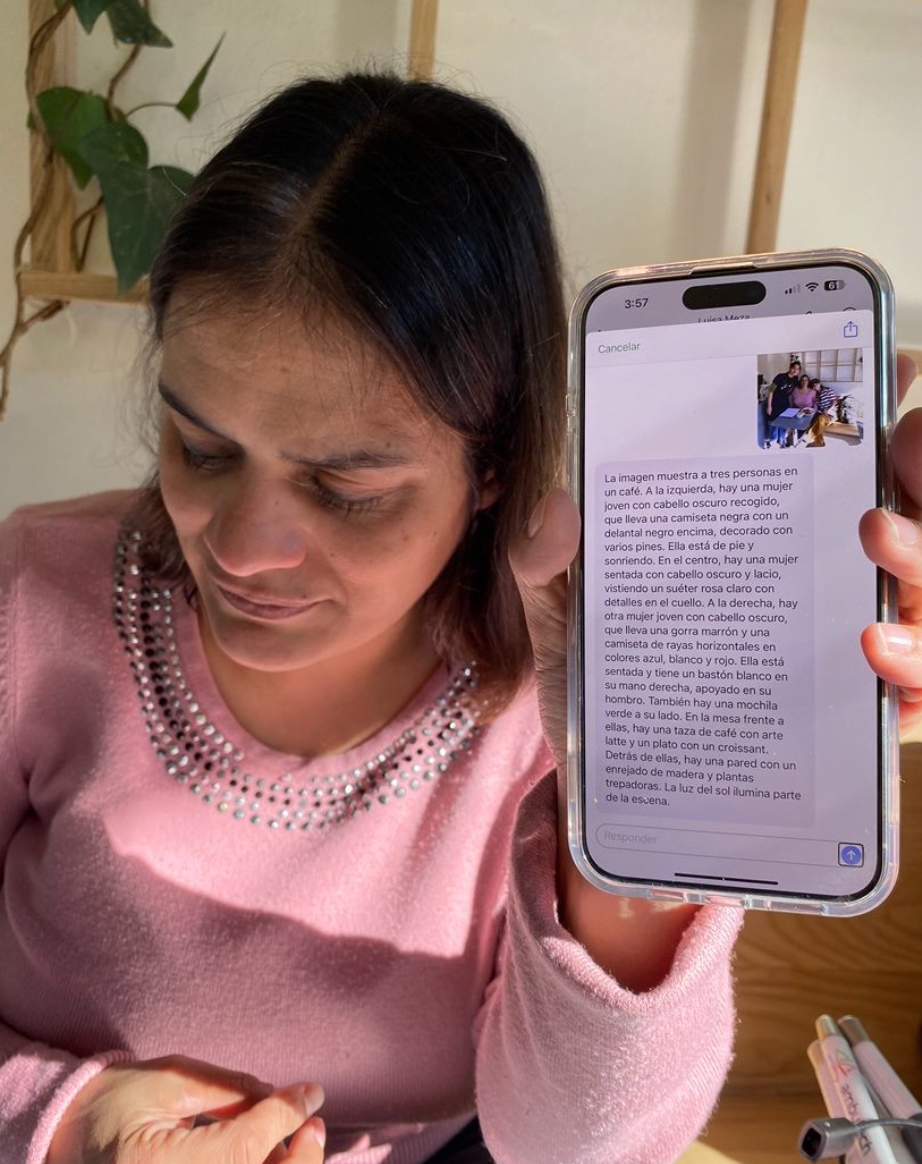
That's changed. Now she snaps a photo, asks for a description and, seconds later, she's got the full picture: who's sitting where, what everyone's wearing and whether there's latte art on the table. I watched her do this right after we took a picture together at a coffee shop. She read the AI's description out loud and cracked up.
"Now I can laugh at the same memes you do," she told me.
That line hit harder than any impact report I've ever read because it's not just about independence. It's about not being a beat behind the joke everyone else already got.
And Lucero is just one story among thousands. Right now, people are discovering an entirely different version of the world because of this: Someone who doesn't speak the local language can suddenly translate a conversation in real time at the pharmacy. People who are deaf or hard of hearing can communicate without a middleman at a coffee shop, in a classroom or at a restaurant. Doctors in places with no specialists. Scientists without a lab budget. Teachers with thirty kids and zero extra resources. Students with no tutor and no extra classes.
For all of them, there used to be a gap that they had long stopped questioning; it was just part of how things were. That gap is closing now, not because someone built a custom fix for each of them but because one tool turned out to be accessible enough to show up for all of them at once.
The real question
We've spent years arguing almost exclusively about how dangerous the tool is. Almost none of that time has gone into the harder question: What does it say about us as a society that we trust our own species so little with something powerful?
To me, AI is one of the best technologies we've ever built. Not because it's perfect — it isn't, and it carries real risks that deserve serious regulation. Still, for once, something genuinely powerful doesn't ask for your zip code, your degree or whether you can see before saying, "Here it is. Use it."
The question was never whether technology would outgrow us.
It's whether we deserve to be holding it in the first place.
Join the conversation
Loading comments…